
Featured





In tightly woven yet ludic lyrics, this collection of five long poems mines tropes from embryology, morphology, and silent film to consider the first and lost causes at the foundation of a personal, social, and historical life.
“Not the female or male gaze, but the plant’s gaze.”
—Carrie Hunter
Out of the crises of our moment, Keith Newton’s first book of poems roams across time to explore our conflict with forces larger than ourselves.
“There is an eeriness to these metaphysical reflections, as if Newton has succeeded in drawing a map of the inside of an ever-questioning mind”.
—Mary Jo Bang
In a tour-de-force of one hundred sonnets, Rodrigo Toscano blends geopolitical critique with the challenges of media-saturated life, offering a sharp, sustaining read for those overwhelmed by the twenty-first century’s complexities.
“tremendously funny… as good as any sonnets being written today.”
—Shane McCrae
Jacqueline Waters's fourth collection confronts the ways we push each other around, hoping for a little win, settling for the slow diminishment of our souls.
“An adventurous, diamond mind.”
—Ariana Reines
Comprising a decade of writing, James Loop’s debut collection chronicles an ordinary life in patriarchal time, its subjugation and inventive resistance.
“Attention, memory, and intellect gleam as forms of intimacy.”
—Stacy Szymaszek
Serena Solin’s first full-length collection pulls from the pre-individual realm of birth and infancy, the collectivity into which we grow, and the narrow pathway in between.
“A luminous elegy on loss that unfolds in inventive forms.”
—Brenda Coultas
In this genre- and gender-breaking work of theory-fiction, legendary writer and cofounder of the 1970s French feminist movement Monique Wittig celebrates the body—lesbian, literary and defiantly political—and challenges the order of heterosexuality in literature.
In her darkly funny 1985 take on Dante’s Divine Comedy, acclaimed French writer and activist Monique Wittig restages the journey through the circles of hell, limbo, and paradise from a lesbian feminist perspective.
A Parisian ’68er embarks to the provinces to teach high school Philosophy but is soon driven out for “corrupting the youth.” Fifty years later, and teaching in the same French Alpine town, Nathalie Quintane delves into the scandal to probe the political order and the failures of a utopian generation.
In her first book of poems, Leah Flax Barber revives an actress figure of the commedia dell’arte to consider her own destiny as a soon-to-be historical subject.
“This book will move you, scare you, and blow you away.”
—Peter Gizzi
Sarah Riggs’s eighth book of poems pulls from the momentum of Lyn Hejinian’s My Life and Bernadette Mayer’s Memory to create a survival manual for a Trump presidency and a family crisis.
“Riggs reminds us how our human need to pause has become in itself radical. A brave and beautiful book.”
— Laynie Browne
Haunted by the violent legacies of colonialism on both landscape and bodies, Cristina Pérez Díaz’s first book of poems deliriously dreams with the foundation of a country from the bed of two lovers.
“Her poetic voice, always in motion, becomes a ship, a captain, and a lighthouse.”
—Mara Pastor
Poet Karla Kelsey’s lyric-documentary rendezvous with iconoclastic writer and visual artist Mina Loy (1882–1966) invents a new form for engaging a life.
“… a novel that is also a poem, a dictionary, a historical compendium, an elegant archival encounter.”
—Danielle Dutton
Bleak, absurd, elegiac, and politically incisive, Alan Gilbert’s sprawling epic poem is a document of these broken times, with a glint of hope for a better tomorrow.
“A brilliant bricolage of life's endless repetitions.”
—Claudia Rankine
Betsy Fagin's third book of poems dwells in the interstices of profound grief and abject wonder, softening into the complexities of human-driven extinction in search of what refuge remains for life in the pyrocene.
“… a dense tapestry of inter- and intraplanetary afrofuturist anti-imperialism.”
—Jacob Kahn
The essays of Austrian documentary poet and photographer Heimrad Bäcker (1925–2003), collected here along with a selection of his photographs and two of his documentary poems, explore the poetic, philosophical, and political stakes of representing the Holocaust, and constitute a crucial source for considering the critical potential of contemporary literature.
Robert Fitterman’s sixteenth and most ambitious book transposes William Carlos Williams’s postwar long poem Paterson onto the segregated suburbs of late twentieth-century St. Louis to track the collapse of the American urban landscape.
“William Carlos Williams would have loved it."
—Sianne Ngai
The first English-language translation of the “secret” poetry of Hélio Oiticica uncovers a crucial chapter in the development of one of Brazil’s most significant twentieth-century artists.
In his second book of poems, Ahmad Almallah seeks a language that captures the afterlives of the mother tongue. This collection blurs the borders between languages, between the living and the dead, between presence and absence.
“… searing confrontations with the lividity and ferocity of grief.”
—Divya Victor
Monica McClure’s second poetry collection excavates inheritances—historical, cultural, familial, and economic—as it alternates between magnified and microscopic views of American life.
Poet Claire DeVoogd’s first book explores what happens to speech, history, and the future when approached from an imagined position after ending—after after—charting a path from an unreal “before” to modernity.
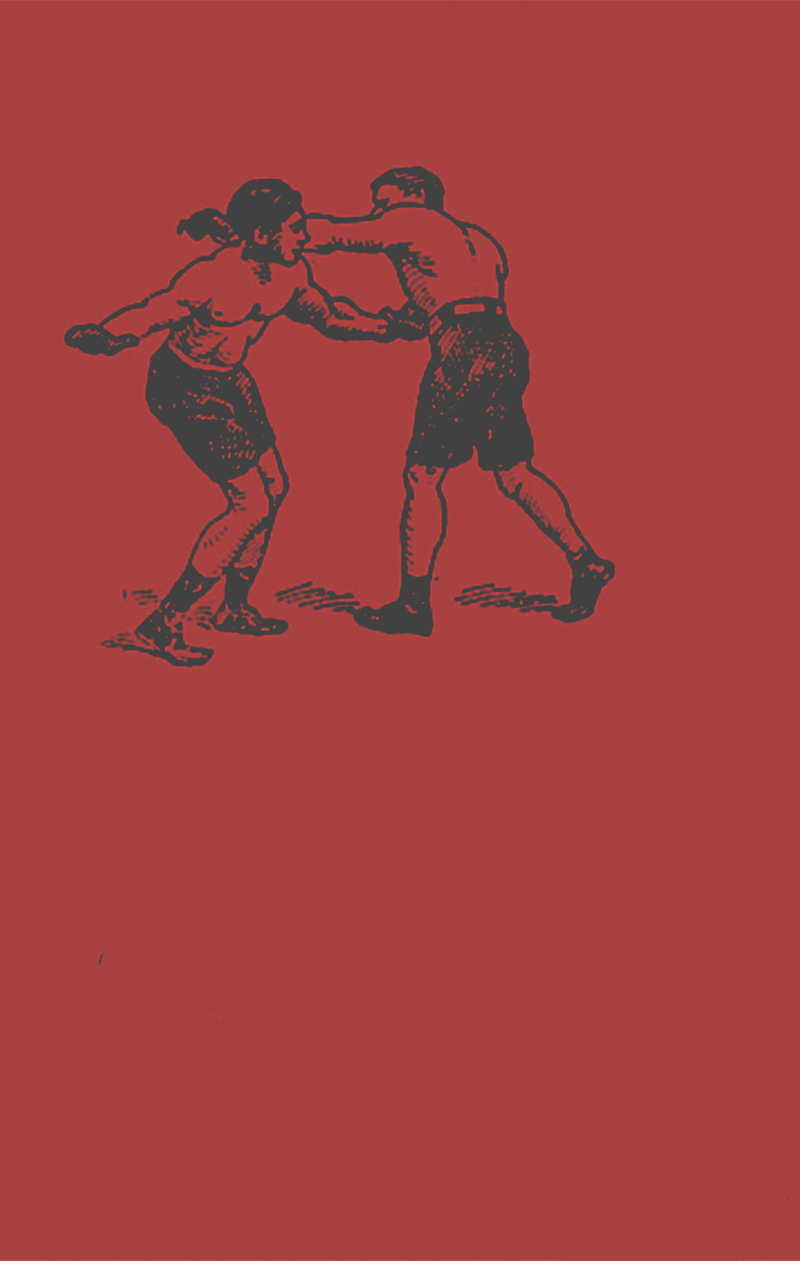
Boys Fight—an artists book by poet Marina Tëmkina and sculptor Michel Gérard—is a response to the emergence of violent factions and nationalist movements over the past decade. These poems and drawings join forces for a “direct hit to the stomach.”
In What Just Happened, Richard Hell’s new poems are interspersed with images created for the book by Christopher Wool. Hell’s 2019 valedictory of an essay, “Falling Asleep,” which asserts his dreamy conclusions regarding the nature of reality, and “Chronicle,” a list drawn from his recent years’ notebooks, complete the collection.
The fiftieth-anniversary edition of New York School poet Lewis Warsh’s long out-of-print translation of a major poem by Robert Desnos, pillar of French Surrealism, presented alongside the original text.
Blending ecopoetics, ghost story, and sci-fi thriller, Garth Graeper's first full-length collection imagines survival in a world where nature, time, and identity are unstable and predatory.
At once a log of pandemic life in New York City and a meditation on selfhood, memory, and language, Emily Simon’s first book is a lyrical and timely experiment in prose fragments.