The Cavalier
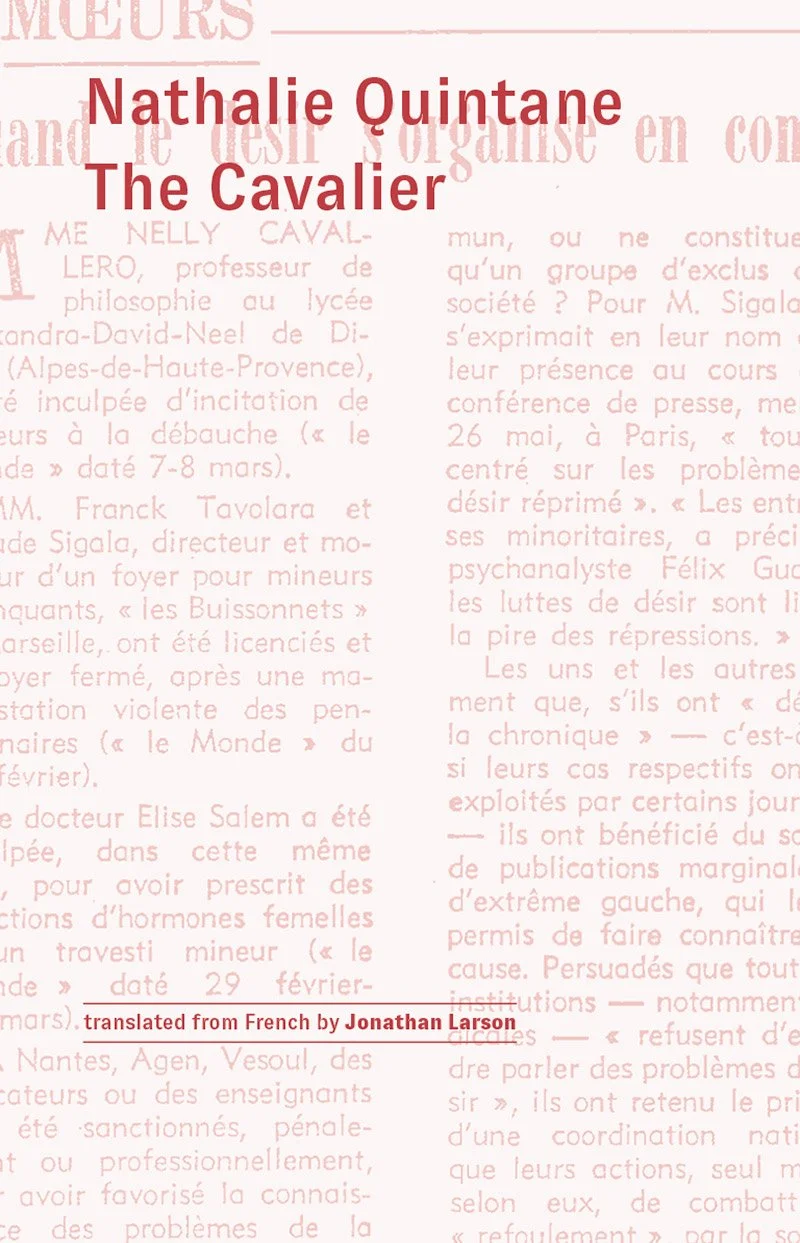
Nathalie Quintane
The Cavalier
Translated by Jonathan Larson
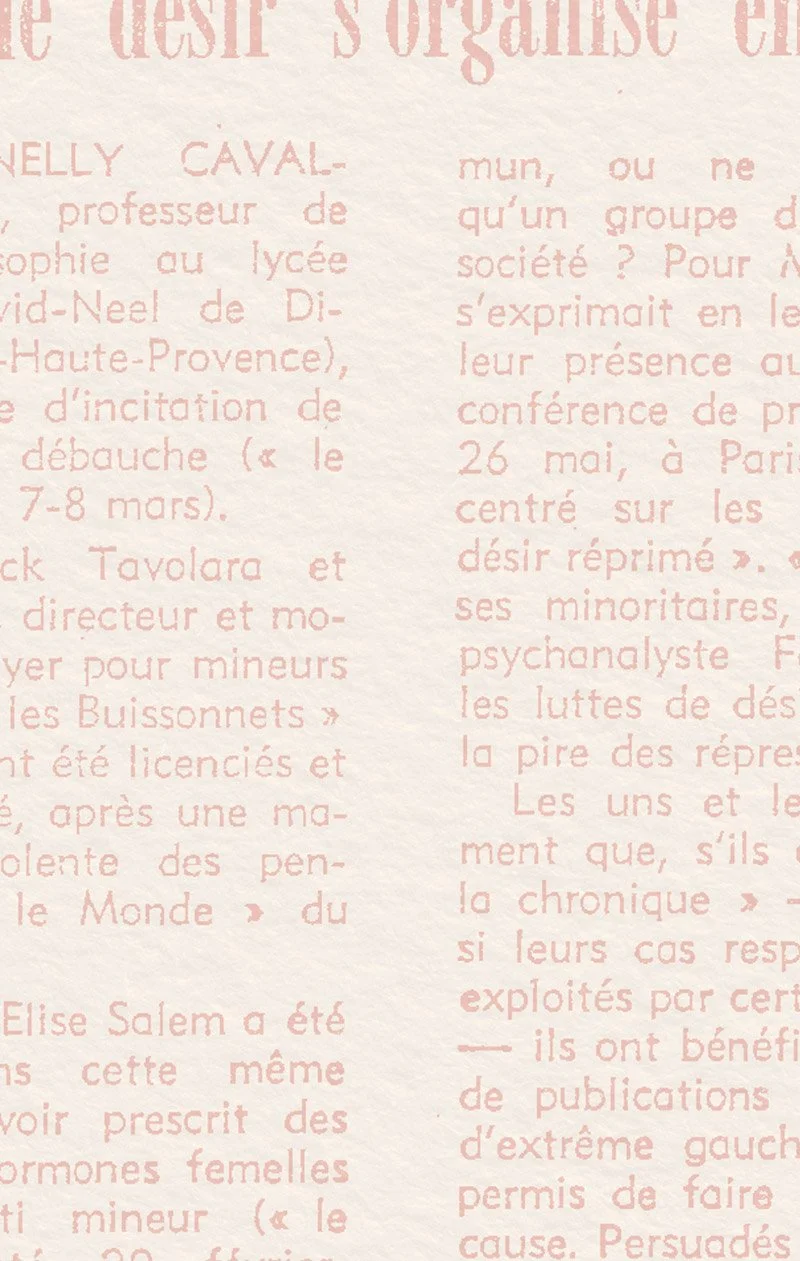
A Parisian ’68er embarks to the provinces to teach high school Philosophy but is soon driven out for “corrupting the youth.” Fifty years later, and teaching in the same French Alpine town, Nathalie Quintane delves into the scandal to probe the political order and the failures of a utopian generation.
After the social upheavals of the late 1960s, the barricaded streets gave way to self-managed communal living in the backcountry. While it was the school teacher Nelly Cavallero who attracted the media spotlight, countless other insurgent unruly radicals contested the oppressive order, organizing in schools, factories, and communes. In The Cavalier, Quintane paints an intimate and urgently political portrait of revolutionary desires and the rising tides of reaction that determined, among many others, Nelly’s fate.
Since the 1990s, Nathalie Quintane has written more than 20 rigorous and genre-defiant works, each distinctive in scope and precision, critiquing everything from the literary marketplace and the education system, to fascization in France and abroad.
“The Cavalier conducts an intimate, anarchic, and speculative archaeology of a modern-day witch hunt in provincial France, unearthing ‘glimpses’ and ‘snatches’ of an elusive young radical whose countercultural convictions evoke the revolutionary spirit of Joan of Arc. At the grand gallop of New Wave cinema, hurdling time, place, characters, and archives, this unclassifiable work of historical attention delivers, as Quintane puts it succinctly, ‘not the revival of a scandal nor even of an offbeat news item, but a current update for the here and now.’”
—Suzanne Buffam
What starts as an inquiry into a forgotten small-town sex scandal becomes, in the hands of experimental poet Nathalie Quintaine, nothing less than the excavation of the radical political and cultural energies that have been systematically snuffed out during the unending counter-revolution that followed May ’68. In The Cavalier, Quintaine displays the gift Walter Benjamin attributed to his ideal historian, the gift of setting alight the sparks of hope that are still burning in the ashes of the past.
—Ryan Ruby
In the 1970s, a philosophy teacher in a small town in France was charged with inciting minors because of her progressive teaching methods, her support for student protests, her friendships and respect. Nathalie Quintane tells her story and at the same time tells the story of 1968 and also the story of today when police still enter schools and teachers still lose their jobs for teaching differently and the poets mutter about how they perform an intervention into the institutions with their language play. It is in part a history and in other ways an autobiography and in still other ways cultural analysis and all the while a sort of literary fiction of the best sort.
—Juliana Spahr
In Nathalie Quintane's Cavalière the distant strains still carry of a greatest generation of French radicalism. Jonathan Larson's translation, with smudged-glass transparency, renders the "glimpses" and "snatches," not to mention the "inaccuracies and fantasies," of a dream-adjacent research project that may speak to us, in words imploring not to work, to love perhaps, to live a life that matches us, today.
—Jacqueline Feldman
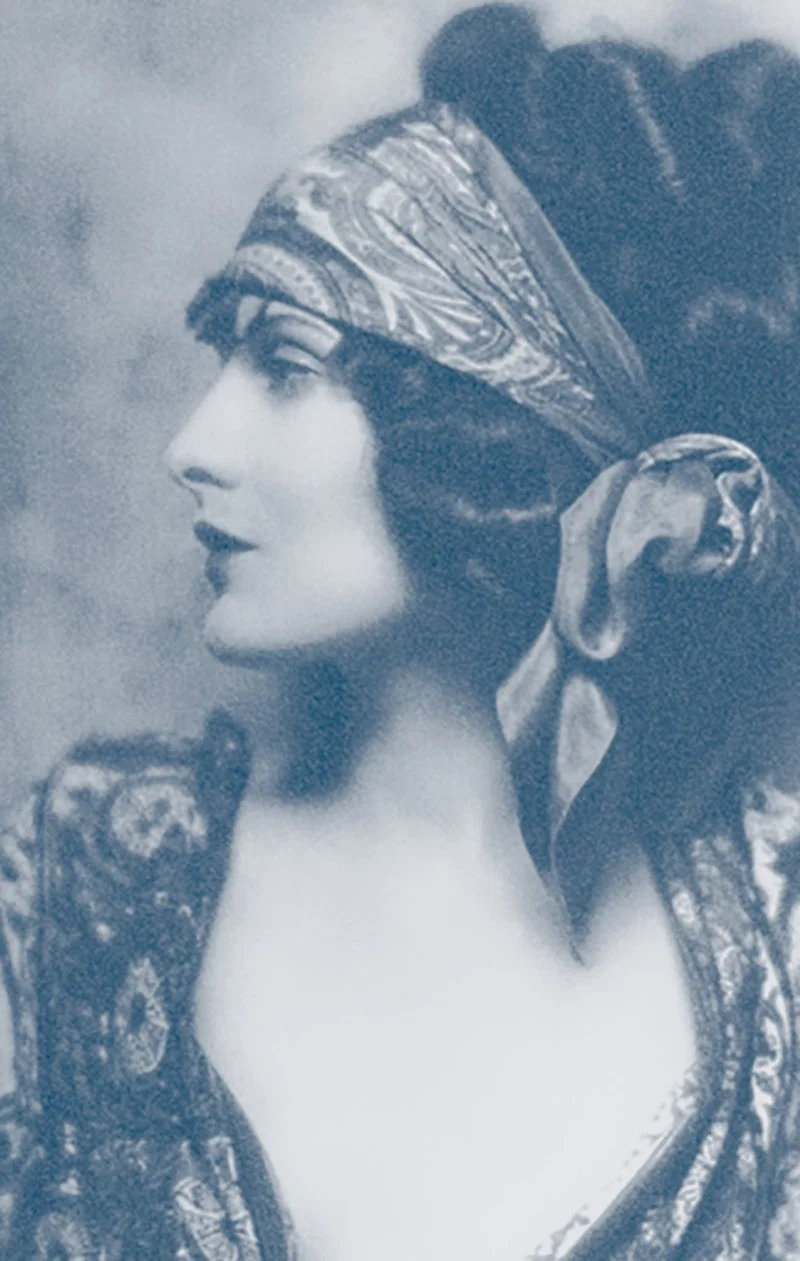
Nelly Cavallero, daring and different in her long black riding cape “of the night,” cuts a figure of unapologetic intransigence. Nathalie Quintane, who wrote this book between the Nuit debout assemblies, the teargas outside the hospital La Pitié, and the police brutality leveled against the Yellow Vests, proposes we take up this ride for freedom once again. How can we refuse?
—Alain Nicolas, L’Humanité
Without the faintest hint of nostalgia, these rocket bursts penetrate the present in a radical, superb gesture.
—Fabrice Gabriel, Le Monde
Nathalie Quintane is a French poet and writer living in Digne-les-Bains, France. She has published more than 25 books in essentially every genre, most of which have appeared with the publishing houses P.O.L. and La Fabrique. Quintane’s writing distinguishes itself by the recombination of memoir, prose poem, narration, reportage, tract, journalism, autofiction, pastiche, literary criticism, etc. into new literary forms. In the 1990s, Quintane began publishing and performing in Marseille alongside poets Christophe Tarkos and Stéphane Bérard with whom she established the poetry review RR, which parodied the literary establishment. Beginning with her first books, Chaussure (Shoe) and Remarques (Remarks), her writing has continued resisting the fixed style of la belle langue (beautiful language) which dominates the global literary marketplace, while also seeking to destabilize the overreliance on derivative stylings among the insurrectionary left. Her bio on her publisher’s site reads: “My name is still Nathalie Quintane. My birthdate has not changed. I live in the same place to this day. There aren’t many of me, but I am determined.” Two of her books, Joan Darc and Tomatoes, have previously appeared in English translation with La Presse and Kenning Editions, respectively. Quintane was the last recipient of the Prix du Zorba (otherwise known as the Anti-Goncourt award) in 2018 for her book Un oeil en moins (One Eye Less).
Jonathan Larson is a translator-poet living in Brooklyn. His translation of Francis Ponge's Nioque of the Early-Spring and Friederike Mayröcker's Scardanelli were both published by The Song Cave and his translation of Mayröcker's From Embracing the Sparrow-wall, or 1 Schumann-madness was published by OOMPH! Press. He is currently working on his own book project titled Idiomatic.
Paperback
128 Pages
5.12 x 7.95 inches
Edition of 2500
ISBN 978-1-959708-15-5
November 12, 2025
English
Distributed by Asterism Books (US) • Public Knowledge Books (UK)
Genre: Non-fiction